When me and my dreams vanished in a day
Seyhoun Gallery, 2012
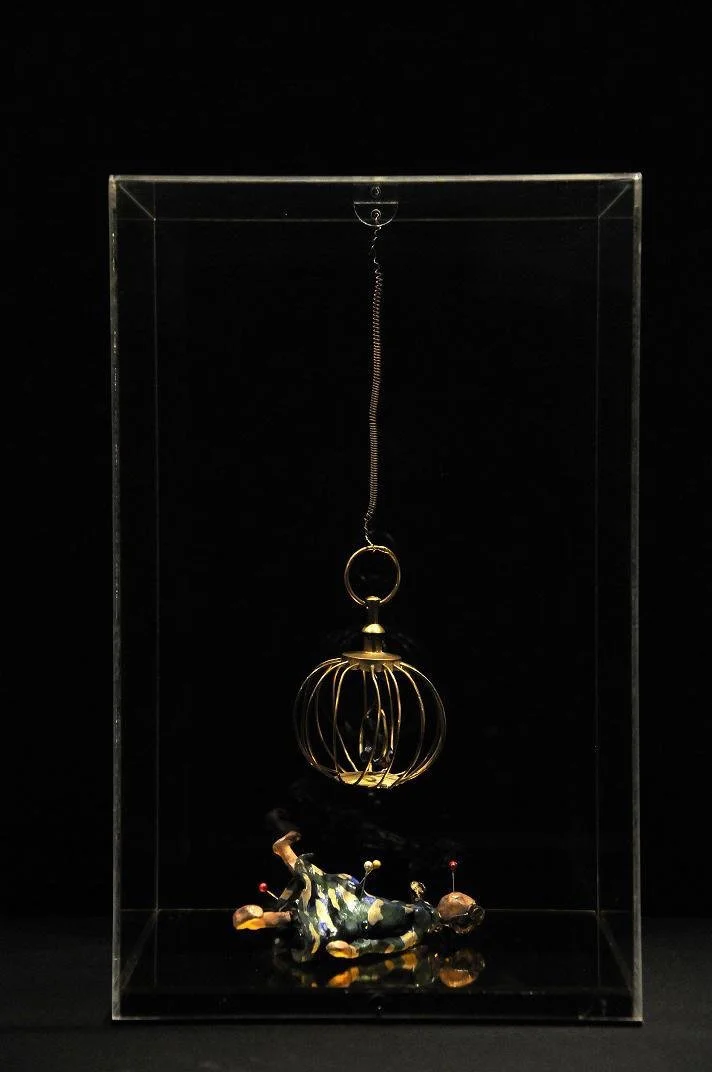
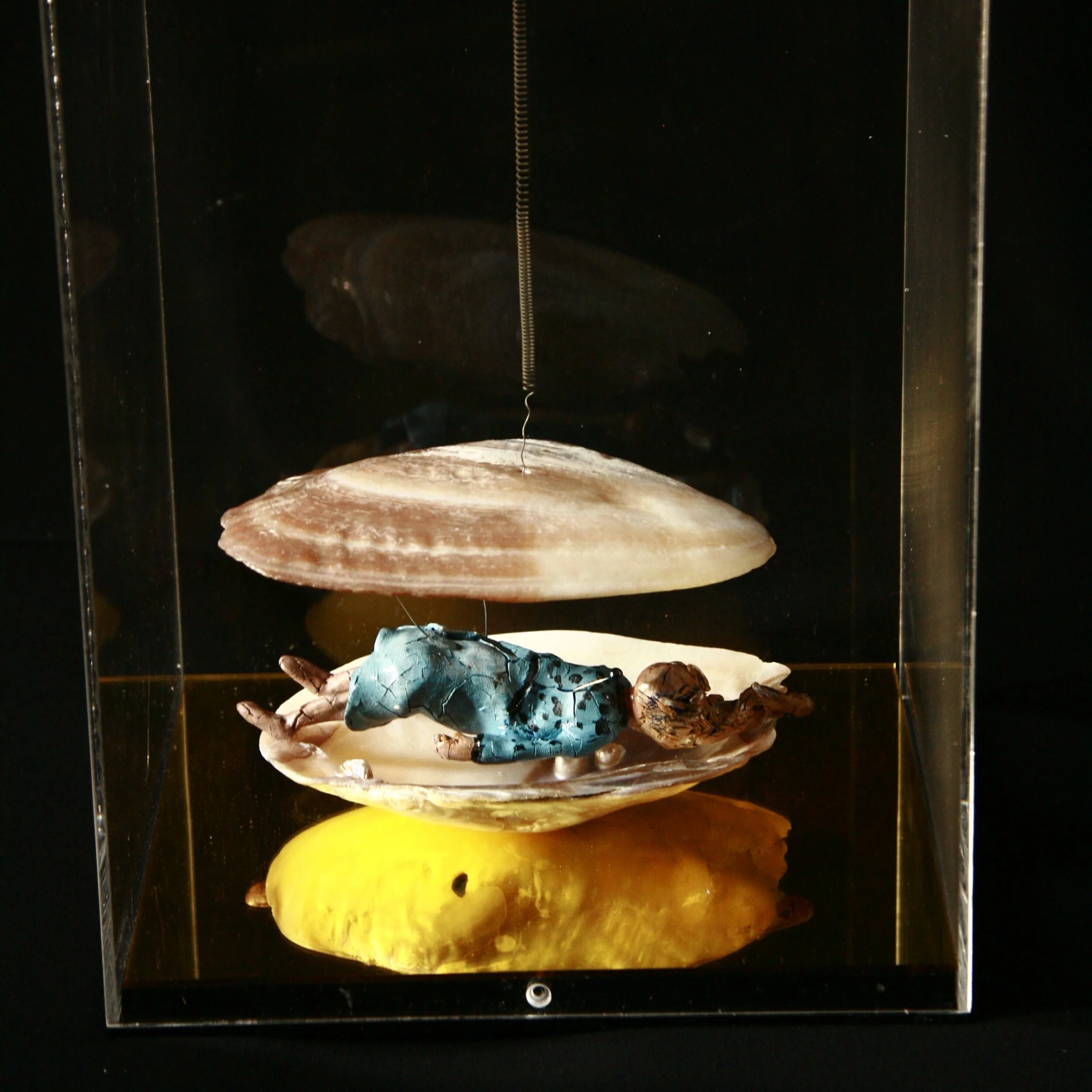
Imagine encountering a transparent glass box with a golden floor—measuring 18 ×22 × 35 centimeters—suspended 110 centimeters above the ground, and impossibly distant from the sky. From one angle, a human figure appears weightless,legs no longer touching the ground, drifting like a balloon that has slipped free of its thread. The figure repeatedly strikes the glass walls, feeling pain yet unable to escape. From another angle, the same box reveals a different scene: a human quietly writing. Writing what? The trivial events of everyday life—the commonplace details we cling to in order to momentarily quiet the chaos of the mind, to regain enough distance to observe our surroundings.
As you circle the box further, another figure comes into view—a presence unable, or unwilling, to see truth. This figure chooses dreams over reality, retreat over participation. The absence of presence fractures identity and quietly pushes others away.
Move again. From the left, a new figure appears: a person negotiating with existence itself, bargaining internally for meaning. These lives may seem meaningless to us, unfamiliar, even unreal. Yet they feel insistently present. Still, none of this is reality. These scenes are dreams. And yet—standing at a distance—I suddenly recognized myself. The box and I dissolved into the corners of perception. Those observing from afar were astonished. It was there that I understood: we are all lost in a corner—the point where our dreams intersect. We are together inside another box, while others, contained within even larger enclosures, watch us. When I woke, I realized I had dreamed these images on the same day my dream and I became lost. I do not remember the exact date.